
What’s in a Name?
As a student—undergraduate and in three graduate schools—I’ve been overprivileged by exposure to some fine and occasionally exotic minds of a certain age. Anthropologist Gregory Bateson (1904-1980), American anarchist Paul Goodman (1911-1972), philosopher Abraham Kaplan (1931-2023), media guru Marshall McLuhan (1911-1980), physicist Fred Knelman (1920-2007), feminist sociologist Dorothy Smith (1926-2022), Marxist historians Eric Hobsbawm (1917-2012) and Edward Thompson (1924-1993) come prominently to mind.
That said, I have learned more (and more things that mattered) from my Seneca colleagues than from those prestigious professors. Among the Senecans, the most influential was Frank Eastham (1944-1998), who briefly taught here and remained a life-long friend.
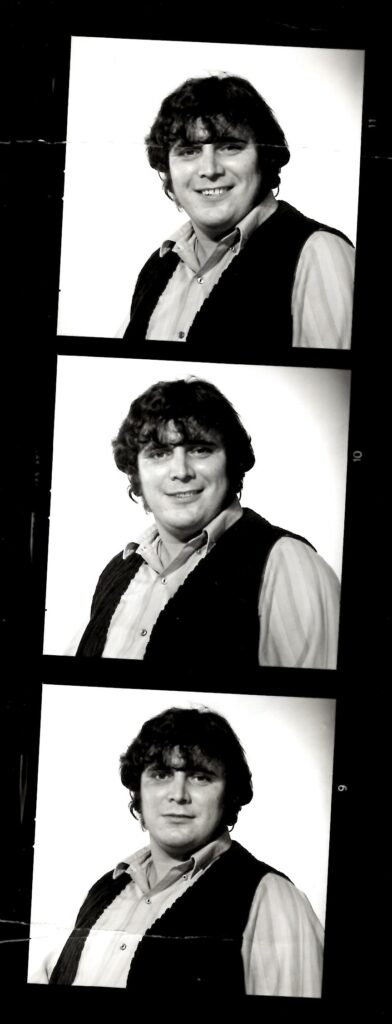
At our first faculty meeting in August, 1969, College Dean Bill Stoddart unleashed an impassioned harangue. He told us to abandon any academic pretenses and understand that Seneca worked on the “industrial model.”
The message was searing. It violated foundational CAAT(Academic) principles and broke promises made at our hiring. At lunch, we newbies shared some angst and contemplated reassessing our career choices.
Quickly tiring of the whinging, Frank leaned forward and declared: “Surely, gentlemen, there must be a strategy more ennobling than a pre-emptive cringe.” The mood changed to one of cautious but clear defiance. A union flame was kindled.
A former bricklayer’s apprentice-turned-Liverpool longshoreman, Frank was an imposing physical presence. He’d won a trade union scholarship to study Law and Politics at the University of Hull, emigrated to Canada, completed an MA thesis at McMaster on the United Steelworker’s Local 1005, and joined Seneca’s expanding Liberal Studies Division.
Frank taught me what I needed to know about working-class history and the origins and evolution of trade unions. He gifted me several books, notably Edward Thompson’s 958-page paperback, The Making of the English Working Class—a constant inspiration for over 50 years. He acquainted me with Jeremy Brecher’s Root and Branch, which schooled me in more recent American workers’ movements and provided the title for these musings. It’s available free-of-charge at <https://files.libcom.org/files/2022-04/Root%20and%20Branch%20Rise%20of%20the%20Workers%20Movements%20Enlarged%20Final.pdf>.
For the next while, I’ll be adding reminiscences and remarks about Unions, OPSEU/SEFPO, and our own Local 560, which I hope to be engaging and instructive.
It’s not my first attempt. As President of the long-defunct Seneca College Faculty Association in the mid-1970s, I edited a bimonthly newsletter called The Black Lamp, which sucked what bravado it could from a ragged-trousered collection of 200 workers in Leeds whose demands for full employment and tax relief were met with charges of criminal conspiracy and threats of deportation or the gallows.
Heady stuff!
More recently, I spent a decade publishing book reviews in the OPSEU/SEFPO periodical, In Solidarity (available online) and planted about a dozen articles in our own newsletter, The Local, under the title “Beyond the Pale”—drawing desperately on the spirit of Irish resistance during the British occupation.
Roots and Branches turns from antique connections to our Union and the current Union ecology. I welcome comments. My skin is thick.