
JOINING THE UNION
Early employer/employee relations at Seneca were peculiar. Bill Newnham, the president, was a former high school principal. His founding “team” included several of his high school department heads and the management crew of barely twenty were conspicuously lacking in post-secondary experience. The faculty, on the other hand, were equipped with both professional and academic experience and aspirations. Early on, “administration” did what it was good at— bureaucratic necessities—and pretty much left curriculum, teaching practices, and professional development to faculty. There was a tolerable level of mutual acknowledgement and even respect… that would not last.
While some of us clung to the illusion that we were “professionals” and not “blue-collar workers,” some agitated for a province-wide faculty union, some naively wanted a Seneca-only “association,” while others considered joining CUPE. The provincial government had other ideas.
The story is best told by my friend, former Glendon College schoolmate, and summertime co-worker with the then-Township of Scarborough (he collected garbage while I painted fire hydrants), Wayne Roberts, in his semi-official history of OPSEU, Don’t Call Me Servant: Government Work and Unions in Ontario 1911-1984 (1994).
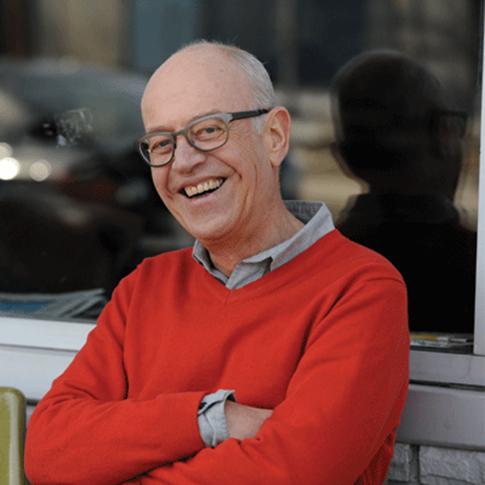
Wayne Roberts (1944-2021)
Three problems immediately arose. Firstly, the organization was then known as the Civil Service Association of Ontario, Inc. Established in 1911. Wayne wrote that the CSAO styled itself a “professional” body of government workers that emphasized “self-improvement, self-reliance, and socialization… .” There was “no mention of bargaining units, contracts, grievances, solidarity, taking on the employer.”
Sixty years later, CSAO Inc. remained a “tea-and-crumpets” organization with its leaders as interested in cozy personal relations with important politicians as in improving the wages and working conditions of its members. That’s what we were manipulated into joining; that’s what we helped to change.
Secondly, we were saddled by a strict reading of the Crown Employees Collective Bargaining Act which enshrined dictatorial management power while we sought an adult discussion of “professional” concerns. As OPSEU staffer, Andy Todd explained:
“[We] had a university argument, but [we] didn’t have a university… College management’s fixation on management rights, was a recipe not just for hard bargaining, but for ideological warfare. And that’s what we had in the community colleges… From day one, we’ve had an adversarial relationship beyond all reason.”
Thirdly, college faculty, with an inflated sense of our professional status, were ill-at-ease with our association with corrections officers, department of highways road workers, forestry workers and clerical staff. We were easy marks for the employer’s hard-headed lawyers. Meanwhile our elected representatives thought OPSEU staff did a lousy job and, for their part, OPSEU staff thought we were played for suckers.
As Bob Hebdon, my friend and former OPSEU staffer explained, “for academics, negotiating is like the Oxford Debating Club, and the purpose [was] to make the other side look like jerks. My purpose [was] to come away with some money.” After researching for several faculty bargaining teams, Bob begged off: “Seniority had to be worth something,” he confided. “To be a staffer assisting college bargaining teams was an assignment from hell.”
In time our members and our leaders began to adjust. There was also some adjustment at Head Office. Within a decade we would be tested.